




Gezza
Chart Veteran
-
Joined
-
Last visited
Everything posted by Gezza
-
 84. HOT LOVE- T.Rex (549,400) 1971 17 weeks on chart Peak position: 1 One of the first stars of the 70s and of Glam Rock, Marc Bolan was the talisman for the group and was responsible for changing the psychedelic folk music they were making in the late 60s into a more pop friendly sound by the early 1970 and 11 consecutive top 10 singles followed (only one of those failed to make the top 5). That included 4 chart toppers in just over a year and none of them bigger than this one which lasted 6 weeks at the top in early 1971.

-
85. ROCK YOUR BABY- George McCrae (549,200) 1974 14 Weeks on chart Peak position: 1 A song which was one of the first to introduce the world to the drum machine and popularly labelled as the “first Disco number 1”. This was written by two members of K.C & The Sunshine band and was intended for McCrae’s wife but when she couldn’t make the session they recorded it with McCrae instead and the magic was born. It has been cited as the inspiration for both Lennon’s “Whatever Gets You Through The Night” and Abba’s “Dancing Queen”

-
86. MOTHER OF MINE- Neil Reid (549,000) 1972 20 Weeks on chart Peak position: 2 Those of you who believe that it wasn’t until “Popstars” that talent shows produced chart stars are in for a surprise- way back in the 70’s it was “Opportunity Knocks” that got a fair few acts onto this list including Reid. At just 12 he won the show in late 1971 and released this track early the following year almost making No 1, he did better on the album charts hitting the top and making him the youngest act ever to score a UK No 1. His follow up single missed the top 40 and just two years after his win on TV his voice broke and Reid gave up music ending up as a management consultant though the song did eventually see the top spot as a b-side to Little Jimmy Osmond’s “Long Haired Lover From Liverpool” later in the decade.

-
87. SO YOU WIN AGAIN- Hot Chocolate (542,700) 1977 11 Weeks on chart Peak position: 1 One of the most consistent acts of the 70s, they had 8 top 10 singles and charted in the top 20 in every year of the decade but this was their sole chart topper. This was one of the few singles they released which wasn’t written by members Brown & Wilson.

-
88. SON OF MY FATHER- Chicory Tip (541,800) 1972 13 weeks on chart Peak position: 1 Co-written by Giorgio Moroder and released first in German by Michael Holm in 1971 but it did also get a UK release by the man himself which flopped in the UK. It was picked up a year later by Chicory Tip via their studio manager and made the top spot, notable at the time as the first chart topper to feature the synthesizer, it had lyrics slightly altered from the Moroder original.

-
89. HOW DEEP IS YOUR LOVE- The Bee Gees (541,400)* 1977 15 weeks on chart Peak position: 3 A song which was. Briefly, considered to be given to Yvonne Elliman but was considered too good to be given away by their manager. It served as the lead single from the “Saturday Night Fever” and naturally made No 1 in the US (where everything they touched was topping the charts) though only No 3 here but was their first top 3 hit since 1969 so was still a return to form and of course finally made No 1 with Take That’s version some 19 years later.

-
90. YES SIR I CAN BOOGIE- Baccara (533,600) 1977 17 weeks on chart Peak position: 1 Proving that dreams can come true for more than just Gabrielle! These two flamenco dancers in Fuerteventura were spotted dancing and singing by a RCA records executive on holiday and got signed to international fame with this song. It became their sole chart topper and has surfaced more recently in adverts for Primark (and H &M a few years ago). This was the first UK No 1 single for a vocal female duo and the first for a Spanish act ever.

-
91. ANGELO- Brotherhood Of Man (532,600) 1977 12 Weeks on chart Peak position: 1 The group’s second chart toppers told the tale of a lonely Mexican shepherd who falls in love with a rich girl whose family disapprove. Naturally they run away and die in a suicide pact- a cheery 70s tale, apparently it was based on the “Romeo & Juliet” fact fans

-
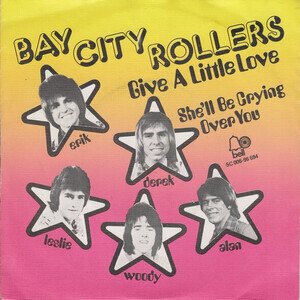
92. GIVE A LITTLE LOVE- Bay City Rollers (529,800) 1975 9 Weeks in chart Peak Position: 1 They could no wrong in 1975 when Rollermania swept the UK sending this to the top just as it its predecessor “Bye Bye Baby”. This was, at least, an original composition taking just a fortnight to make the top and was gone from the charts after 9 weeks showing how concentrated those sales must have been.
-
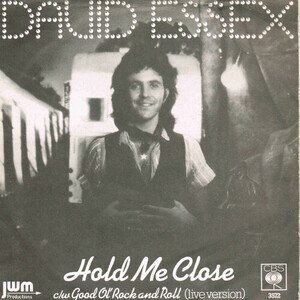
93. HOLD ME CLOSE- David Essex (526,000) 1975 10 weeks in chart Peak position: 1 Jeff Wayne produced track which became Essex’s second and final chart topper. It helped cement his position as the heartthrob of choice by the end of 1975 for those not swayed by the Bay City Rollers. Essex had returned to the stage by the end of the 70s and of course tipped up in “Eastenders” in the 2010’s
-
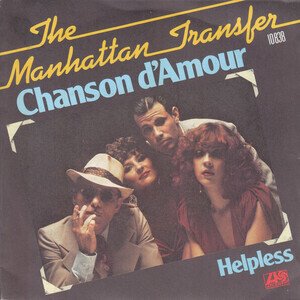
94. CHANSON D’AMOUR- Manhattan Transfer (525,900) 1977 13 weeks in the chart Peak position: 1 A #6 hit in 1958 for Art and Dotty Todd in the US, it was largely overlooked since and failed to make it big internationally until Manhattan Transfer stumbled on it in 1976 and recorded this version. The lead singer made a purposeful effort to sound like Edith Piaf and the song actually hit it big in France but flopped in their native US initially. It then went on to conquer all of Europe including the UK before eventually making No 16 in the US.
-
I think BMRB coped very well with standard hits but the truly popular ones are mostly under represented on the list which lends weight to the theory that the really big hits are not reflected fully in the panel sales. There is a huge example of this (well more than 1) that I'll deal with at the end of the thread when we cover songs in the BMRB top 100 but aren't on this list. From memory I don't think Woolworths provided sales to the BMRB (they only signed on for Gallup) so that may also account for a difference. They may have multiplied up for the scale of the market but maybe not weighed it properly. For example, let's say there were 1,000 record shops in 1977 (for arguments sake) of which 50 provided data to BMRB, BMRB may have thought "OK we're sampling 5% of the market so if we multiply by 20 then we get an idea what the market is selling overall". That's fine but the other question (which Galluped worked out)- is that you need to know what % of the market the other 95% of shops are selling. Gallup "weighted" their samples so gave different allowances to sales of records depending on where they were sold - for instance 300 copies of a record sold in HMV on Oxford Street in London is not likely to be selling the same in a Woolworths in a small town in northern Scotland. Anyway we're just speculating and unless anyone wants to volunteer some info from the time when they working for BMRB then we kind of have what we have.
-
Though presumably less opportunity to buy as the record shops were shut? Obviously there is a big sales week missing for Slade which helps to explain- though Slade never sold a million in the 70s of the track (it was certified as Paltinum in December 1980) and Alan Jones gave it sales of 989,000 in February 1980 which fits. This however does not account for the variation needed to reconcile both figures so we return to the first post for the explaination (in particular point 3 that sales outside the top 50 are not known, and point 4 that Saturday sales were seldom collected) plus it could have been selling significiantly outside the panel shops and this cannot be sorted out by the standard multiplier. In any eventuality that's all the panel sales show for it
-
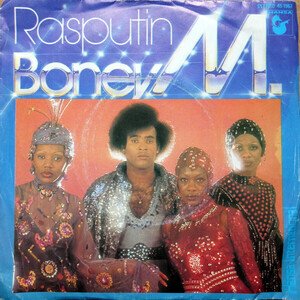
95. RASPUTIN- Boney M (525,100) 1978 10 weeks in chart Peak position: 2 Svengali Frank Farian to the rescue again with this recanting of the tale of Rasputin set to a disco beat, though lyrics suggesting he was definitely the lover of the queen remain disputed by historians! It was also (apparently) something of a hit in the Soviet Union at the time reviving the reputation of the man himself, here it was held off the top by Olivia Newton-John & John Travolta despite selling over 100,000 a week at its height. The first of 4 acts to appear 3 times on the list!
-
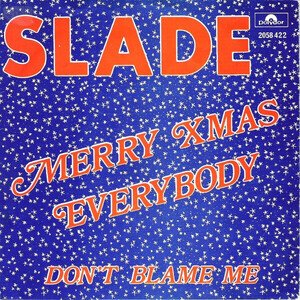
96. MERRY XMAS EVERYBODY- Slade (522,800)* 1973 9 weeks in chart Peak position: 1 Well this is rather lower than it (probably) should be on the list. Slade’s 6th and final chart topper has of course become a Christmas staple over the years after it was the festive No 1 for 1973. It started life as a melody Holder composed in 1967 but then disguarded, when it was proposed the group write a Christmas single it was brushed down and given new lyrics then recorded on a hot day in July in New York. Of course the Christmas week is missing sales wise which would have pushed it further up the list but panel sales wise this is your lot! It also creates chart history when it replaced Gary Glitter’s “I Love You Love Me Love”- the first instance of consecutive No 1 hits entering the charts at No 1 (and not replicated for another 16 years).
-
97. ANOTHER BRICK IN THE WALL- Pink Floyd (521,200)* 1979 6 weeks on chart Peak position: 1 Here’s the final No 1 of the 1970’s then, written as a three part composition it was part two which was lifted as a single to become their sole chart topper and indeed only UK single of the decade for them! Wiki covers all three parts as: “During "Part 1", the protagonist, Pink, begins building a metaphorical wall around himself following the death of his father. In "Part 2", traumas involving his overprotective mother and abusive schoolteachers become bricks in the wall. Following a violent breakdown in "Part 3", Pink dismisses everyone he knows as "just bricks in the wall." Part two was written as a protest song against oppressive schooling and even featuring a choir for chilling effect, it remains probably their defining moment, at least chart wise. This missed out on the BMRB top 100 list for an unknown reason, but considering it sold a million during it's run at least half a million had to be before the end of the decade, and that despite the Christmas week sales not being included!
-
None of these three are the on the BMRB top 100 for the decade
-
Among tomorrow's entries will include rectifying what was clearly a BMRB error and creating our first controversial moment of the rundown!
-
98. SHE- Charles Aznavour (520,000) 1974 14 weeks on chart Peal position: 1 Described at times as “France’s “Sinatra”” Aznavour was actually born in Armenia, he had already recorded over 20 albums by the time this track was released. It proved his breakthrough here after it was picked up as the theme to the show “Seven Faces Of Woman” on British TV and it helped send the track to No 1 for a month making him the first solo French act to make the top here, it appeared again in the late 90s when used in the film “Notting Hill” covered by Elvis Costello.

-
99. SUBSTITUTE- Clout (518,900) 1978 15 weeks in chart Peak position: 2 A track first recorded by the Righteous Brothers in 1975 but a flop here when released, it was covered three years later by this all female group who almost bagged themselves a chart topper were it not for Olivia Newton-John and John Travolta. The group were from South Africa which meant that under equity rules of the time they were banned from performing on UK TV as a sanction against apartheid. The track was also covered famously by Gloria Gaynor as the original A-side to “I Will Survive” before getting flipped.

-
100. LE FREAK- Chic (518,800)* 1978 16 weeks in chart Peak position: 7 Synonymous with the disco era now this was Chic’s biggest hit of the decade, this track is an homage to the legendary Studio 54 in New York, although it wasn’t an overly positive experience for the band. Nile Rodgers and Bernard Edwards were invited to the club by Grace Jones who failed to tell the bouncers she was expecting guests and the pair were subsequently refused entry with the phrase “f*** off”- that was changed by the pair for the song to freak off and then freak out

-
Ah thanks. I remember buying "London nights" by the London boys in 1989 and being annoyed that I didn't get the proper sleeve but just a plain black one. If I remember correctly it tended to affect records which were nearer the end of their chart life and falling down the charts so what you say makes sense.
-
Actually, does anyone of a certain age recall why, even into the late 80s, when you bought a single it sometimes came in a plain sleeve instead of the proper one, like they ordered in 400 vinyl singles but only had 300 sleeves so when they sold out you got the rubbish plain sleeve?
-
While I remember- a word on single sleeves- singles covers were not always available widely on singles until (roughly) the mid 80s so many singles in the 70s had generic sleeves for the label. So where there is a UK record sleeve I'll use that but where there isn't I'll use a foreign release otherwise most won't be interesting to look at.
-
Well we know what the BMRB put at No 1 yes....but as you'll see it doesn't automatically follow that the using the multiplier gives you the same results as that list...

