



Sydney11
Members
-
Joined
-
Last visited
Everything posted by Sydney11
-
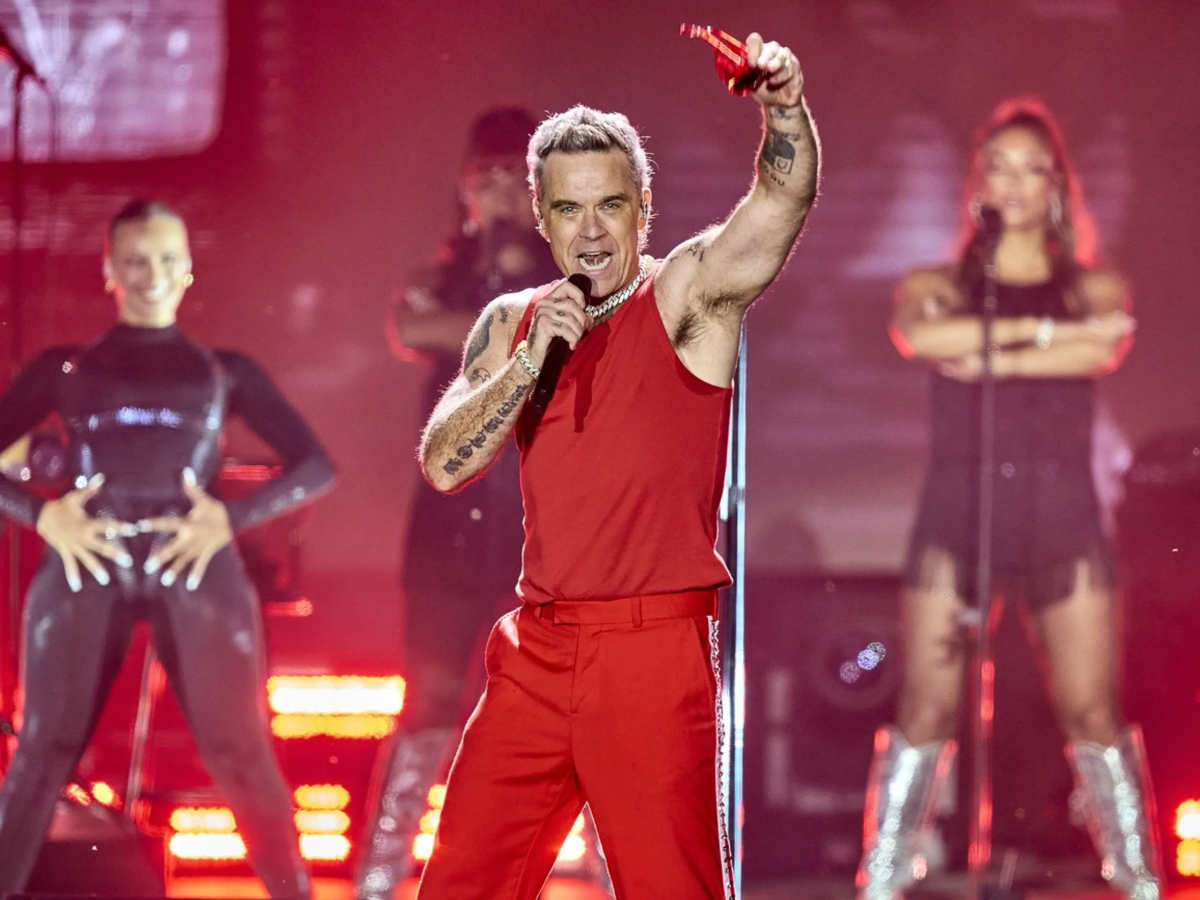
 Robbie Williams: Big hits, fart jokes and a marriage proposalRobbie Williams' concert in Zurich's Hallenstadion is not perfect, but it is still remembered - also thanks to a genuflection. Author:Schimun Krausz Wagner's "Ride of the Valkyries" sounds and transitions seamlessly into the stadium rock final boss "Let Me Entertain You": After just over a minute, the English pop star has the Hallenstadion audience in the bag on Wednesday evening. The 52-year-old introduces himself as "Robbie f***ing Williams" and promises that this first of two virtually sold-out shows at Zurich's Live-Palast is "a love letter to entertainment". Will he keep the promise in these almost two hours? The HitsAt least half of the choruses on this setlist are probably known by heart to anyone who has lent even half an ear to pop music in the last thirty years. «Come Undone»! "Supreme"! "Kids"! «Rock DJ»! "Millennium"! And of course "Feel" and a hastily treated "Angels" as an encore. This time, Robbie sets the reminder that he once sang in the boy band Take That (as "the fat dancer") to music with their cover of the disco hit "Relight My Fire", which, however, sounds more like an unmotivated late-night show than a 90s house banger. Instead, the crooner covers "New York, New York" and "My Way" are spot on, and while he introduces his eight-piece band for just under a quarter of an hour, they blast over numbers by Shania Twain, Queen and the Beatles to the delight of the approximately 13,000 guests. With "Hey Jude" the audience sings along almost louder than with Williams' own hits, but hey: the main thing is the atmosphere. The eye-catcherThe Englishman starts the evening in a red glitter trainer, sunglasses on, sides trimmed. Later, he throws a gigantic pink feather boa – 70s Elton John would nod in agreement – over and immediately throws it off again to present his neon pink suit. This time, Robbie sets the reminder that he once sang in the boy band Take That (as "the fat dancer") to music with their cover of the disco hit "Relight My Fire", which, however, sounds more like an unmotivated late-night show than a 90s house banger. Instead, the crooner covers "New York, New York" and "My Way" are spot on, and while he introduces his eight-piece band for just under a quarter of an hour, they blast over numbers by Shania Twain, Queen and the Beatles to the delight of the approximately 13,000 guests. With "Hey Jude" the audience sings along almost louder than with Williams' own hits, but hey: the main thing is the atmosphere. The eye-catcherThe Englishman starts the evening in a red glitter trainer, sunglasses on, sides trimmed. Later, he throws a gigantic pink feather boa – 70s Elton John would nod in agreement – over and immediately throws it off again to present his neon pink suit. This time, Robbie sets the reminder that he once sang in the boy band Take That (as "the fat dancer") to music with their cover of the disco hit "Relight My Fire", which, however, sounds more like an unmotivated late-night show than a 90s house banger. Instead, the crooner covers "New York, New York" and "My Way" are spot on, and while he introduces his eight-piece band for just under a quarter of an hour, they blast over numbers by Shania Twain, Queen and the Beatles to the delight of the approximately 13,000 guests. With "Hey Jude" the audience sings along almost louder than with Williams' own hits, but hey: the main thing is the atmosphere. Keystone/EPA/Mikkel Berg Trashy? Of course. But if you make fun of yourself and your scandalous pop star past every minute, you can't help it. Especially not when the final outfit is a shirt with "robbie" as the knock-off Oasis logo. By the way, it's also available at the merch stand. The humorTrash also exists away from music. Williams talks about the penis of his former Take That colleague Gary Barlow ("he only has one", aha) and emphasizes again that the white matter in the viral World Cup interview clip this summer was just a remnant of a nicotine Zältli. During "Millennium" he asks one of his dancers to pull on his finger. She does it and Robbie lets go of a mouth fart. He apes the mixed vocal skills of the audience on "Come Undone" and, if it doesn't go crazy, roasts it as soon as he mentions that he has been living in Gstaad for three years. Not every saying is a direct hit, but thanks to his still irresistible mischievous charm, the musician rarely misses. The marriage proposalInstead of prickly, however, it is sometimes cuddly. When he raves (very often, but it is granted to him) about his family happiness with his wife and four children. And especially when he recognizes and greets Robbie superfan Barbara from Bern in the front row – and enables her boyfriend Ben to propose to her. Fortunately, she accepts, otherwise the following "She's the One" would have had an unpleasant aftertaste. Also thanks to the genuflection, the evening was extremely entertaining, as promised. Not perfect, but Robbie never was. And fortunately, it never will be. Robbie Williams in Zurich: Sold-out shows at the Hallenstadion - Radio SRF 3 - SRF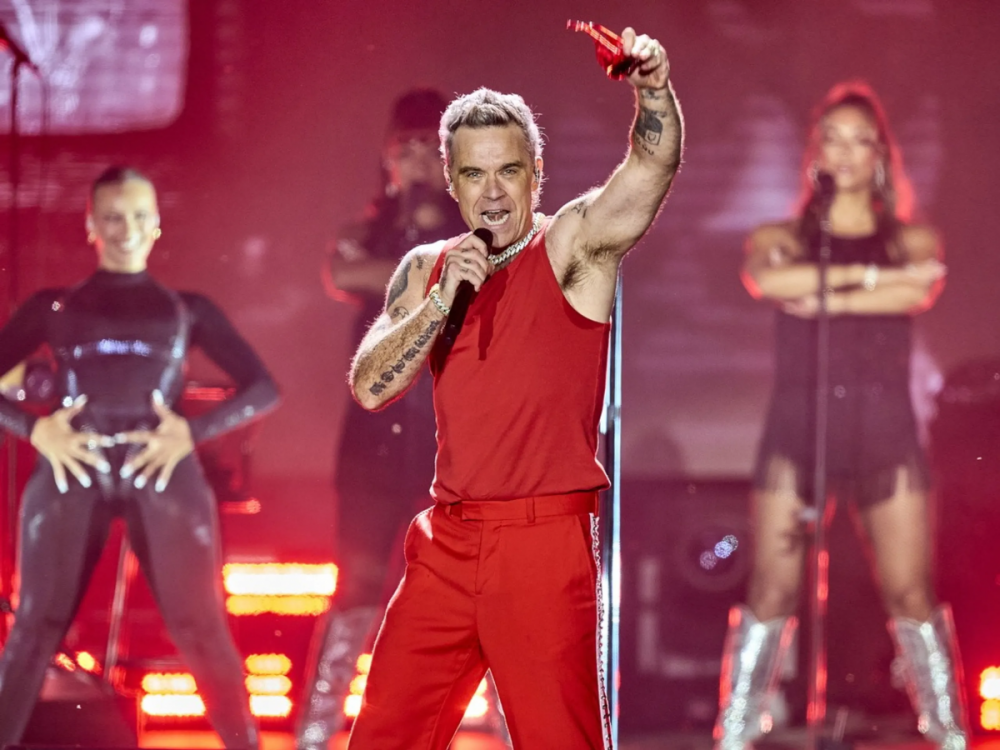
-
Source https://www.youtube.com/@music-and-travel
-
Source https://www.youtube.com/@natidrei5887
-
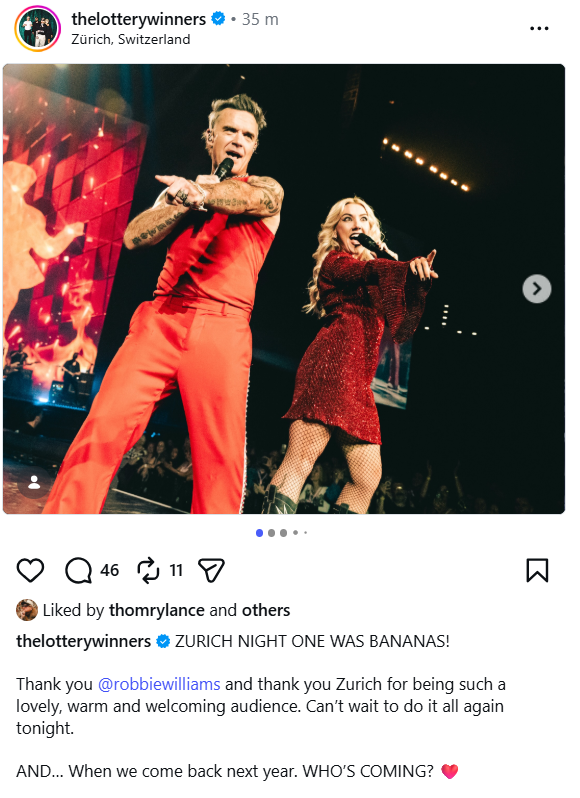
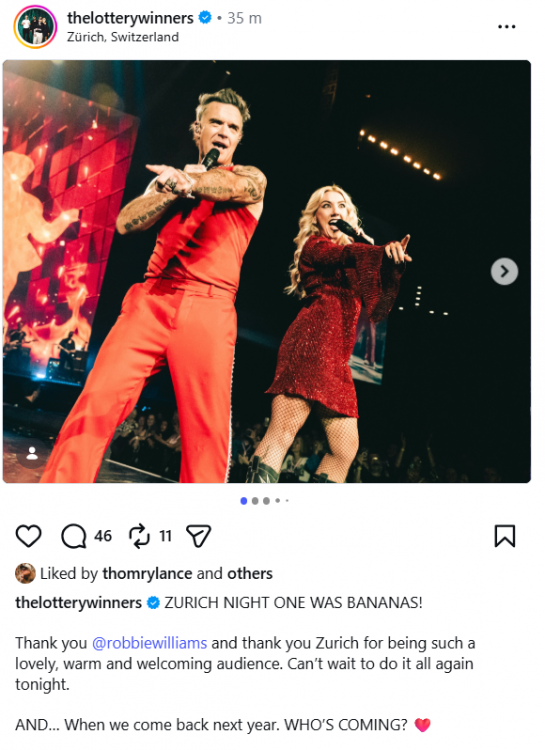
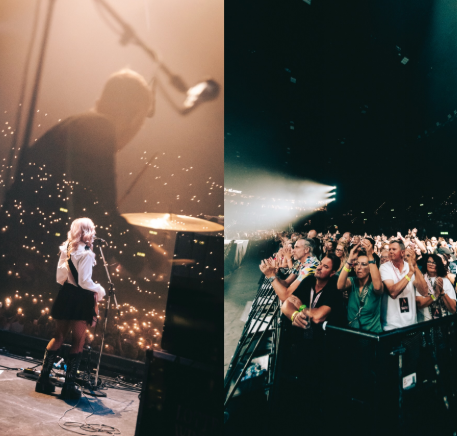
I love these guys, great attitude, Robbie seems to love hanging out with them, great addition to the tour https://www.youtube.com/@TheLotteryWinners/shorts
-
This sounds really interesting. Thanks Lucy & Matt ( Links below ) Special Podcast Episodes In the first of a special series of episodes, we’re delighted to welcome everyone’s favourite music video director, Vaughan Arnell, to Robbie Williams Rewind! Described by Robbie Williams’s own website as “a collaborator almost as central to Robbie’s story as Guy Chambers”, Vaughan has directed some of the most iconic music videos of Robbie’s career. His extraordinary CV also includes videos for the Spice Girls, George Michael, Terence Trent D’Arby, Jamiroquai, One Direction and many more. In this episode, Vaughan takes us right back to the beginning, recalling the first time he worked with @robbiewilliamsvideos when, alongside Anthea Benton, he directed Take That’s ‘Back For Good’. He shares his first impressions of Robbie, as well as some valuable lessons learnt from spending a music video shoot working with a lot of water! Vaughan then took the helm for ‘Angels’, immortalising Robbie in stunning black and white on the beach at Saunton Sands, before filming him amongst netball-playing girls in London’s Paternoster Square. Vaughan reveals what happened the night before the Devon shoot, when he and Rob were very nearly refused dinner at their hotel, and remembers the extraordinary reaction Robbie received in London while filming the kissing scene. Following the success of ‘Angels’, Vaughan directed ‘Let Me Entertain You’, bringing Robbie’s vision of becoming a member of KISS spectacularly to life — complete with leotard, make-up, a full rock ’n’ roll band, pole dancers and groupies. It was on the set of ‘Let Me Entertain You’ that Robbie first played Vaughan his new song ‘Millennium’ and announced that he wanted to be James Bond in the video. Vaughan helped turn that idea into reality in glorious Sean Connery style at Pinewood Studios — where he and Robbie even received a rather unexpected visitor while standing beside 007’s Aston Martin! The video went on to win Best British Video at the 1999 BRIT Awards. And then came perhaps Robbie’s most iconic video of all: ‘Rock DJ’. Voted the third greatest pop video of all time by the public in a 4Music poll in 2010, and winner of Best British Video at the 2001 BRIT Awards, its unforgettable concept became a defining moment in Robbie’s career. Vaughan tells us how the video was brought to life, including the unexpected challenge of discovering that some of his roller-skating models… couldn’t actually roller-skate! From rain-soaked Take That to Angels on the beach, Robbie as James Bond and the extraordinary creation of ‘Rock DJ’, this is a fascinating journey through some of the most memorable music videos in British pop history. We hope you’re as excited as we are to hear Vaughan’s stories on Robbie Williams Rewind! Source https://www.youtube.com/@rewindrobbie https://www.youtube.com/playlist?list=PLJMeKFYvDyBgtW1SGtDLLNKF-iLeWccah Special – Vaughan Arnell, Legendary Music Video Director (Part 1) – Robbie Williams Rewind Special - Vaughan Arnell - Leg…–Robbie Williams Rewind – Apple Podcasts Special - Vaughan Arnell - Legendary Music Video Director (Part 1) - Robbie Williams Rewind | Podcast on Spotify
-
https://www.instagram.com/aydafieldwilliams/

-
mattgriffin_art A proudly completed @robbiewilliams mural for @edenparknz 🎤🏟️ Another superstar artist added to the walls of our national stadium 🇳🇿 Huge honour to paint RW and excited to welcome him to our shores later this year! Painted with @molotowheadquarters


-
Source https://www.youtube.com/@CodeDrumHeads
-
Air traffic chaos in the UK, hope fans flying to Switzerland for tonights gig are not left stranded
-
Video thanks to https://www.youtube.com/@TTTT-bd1ld
-
Video thanks to https://www.youtube.com/@PedroSMarques
-
Robbie Williams-backed ticketing start-up lands £3.9m investmentTickets for Good is hoping to grow internationally, with jobs due to be created in its native Sheffield (Image: Simon Greener/Newcastle Chronicle) A start-up that counts Robbie Williams among its early investors has raised £3.9m towards its international expansion. Sheffield-based Tickets for Good distributes surplus tickets donated by event partners to NHS workers, teachers, charity staff and people receiving Cost of Living support. Recipients sign up for free then pay a nominal transaction fee for each ticket. The four year-old business was launched by serial entrepreneur and creative industries promoter Steve Rimmer alongside fellow music lover Neville Mosey who died in 2023, aged 37. Robbie Williams is an ambassador for the company, along with former Dutch international goalkeeper Edwin van der Sar and music entrepreneur Hans Brouwer. Now it has secured funding from NPIF II – Mercia Equity Finance, which is managed by Mercia Ventures as part of the Northern Powerhouse Investment Fund II (NPIF II), alongside Shaping Impact Group (SI3), Finance Yorkshire, Leansquare and private investors. The funds will help create 10 new jobs in Sheffield over the next three years. That will come as Tickets for Good targets international markets. With almost 750,000 verified members globally and having distributed more than 1.25 million tickets, the start-up entered into the US in 2023 when it was accepted onto the Comcast SportsTech accelerator in St Louis and now also has operations in the Netherlands, Belgium and Germany. Steve Rimmer, CEO and co-founder, said: “Tickets for Good was built on a simple belief that live events should be available to everyone, especially the people who give so much to our communities. This investment is a huge vote of confidence in our team, our partners and the impact we're creating. It will help us grow internationally, create skilled jobs in Sheffield and connect many more people with live events. Neville and I started this with a shared love of music and the belief that unused tickets could do something good. Today, that idea has helped more than a million people experience live events they might otherwise have missed, and we're only just getting started.” Chris Borrett, investment director at Mercia Ventures, added: “Demand for live experiences has never been stronger, however rising ticket prices are creating barriers to access for many consumers, while venues and promoters increasingly recognise the value of full attendance and engaged fans. Tickets for Good has created a powerful solution that aligns these interests. We believe the business has the potential to become a category-defining platform within the global live entertainment market.” Dave Dirks, managing partner at Shaping Impact, said: “Tickets for Good is a strong example of the kind of company we want to support: commercially ambitious, highly scalable and built around a clear social purpose. By making live events more accessible to people who too often face barriers to participation, the company is creating meaningful impact in a sector with enormous cultural and social value. We are excited to support the team in this next phase of growth.” Alex McWhirter, CEO of Finance Yorkshire, said: “In a relatively short space of time, Tickets for Good has achieved significant growth and is now reaching an international audience with its socially driven consumer platform. Finance Yorkshire is pleased to support Tickets for Good in its ambitions to further expand, particularly in overseas markets, and the creation of additional jobs in Yorkshire is particularly welcome.” Sarah Newbould, senior investment manager at the British Business Bank, said: “The North is home to some of the most exciting, fastest growing businesses that are driving a real impact in local communities. Through NPIF II, we’re ensuring they have the capital they need to scale at pace, with businesses like Tickets For Good combining social impact with highly-skilled job creation and international expansion. By backing these businesses, we’re building stronger regional ecosystems while boosting the ability of these businesses to compete on the world stage." Henrietta Street Capital acted as fundraising adviser to Tickets for Good on the investment round. Craden provided financial due diligence support to Mercia. Robbie Williams-backed ticketing start-up lands £3.9m investment | Business Live

-
#215 Take That & Michael Patrick Kelly - ENERGY Startalk | Podcast on Spotify In the latest episode of ENERGY Startalk, Pia got to interview Take That and Michael Patrick Kelly! They just dropped their new single "Feel My Love," and of course, that's exactly what the conversation was about. The two reveal exciting details about their collaboration and joint songwriting. Plus, Take That talks about their tour next year and their upcoming new album. Tune in now to the new ENERGY Startalk!
-
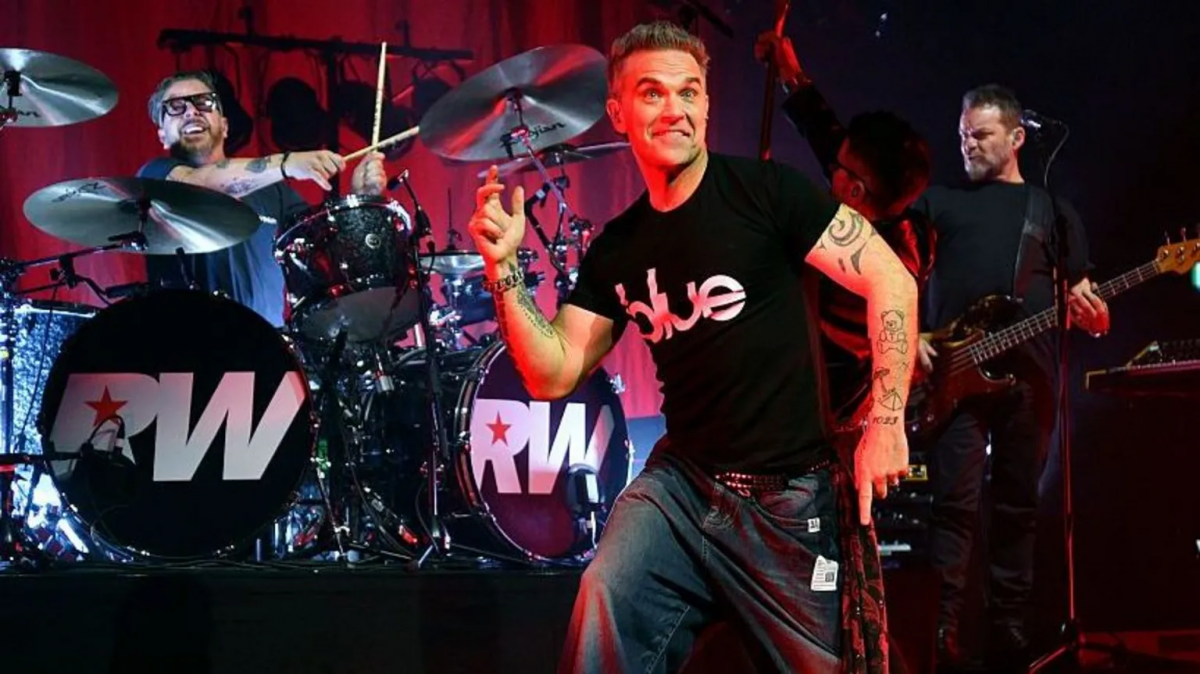
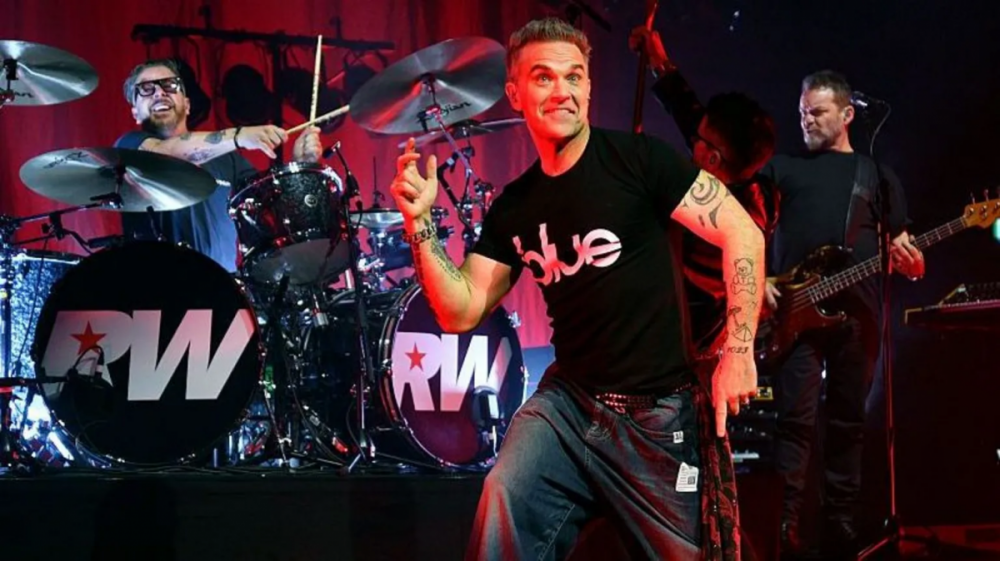
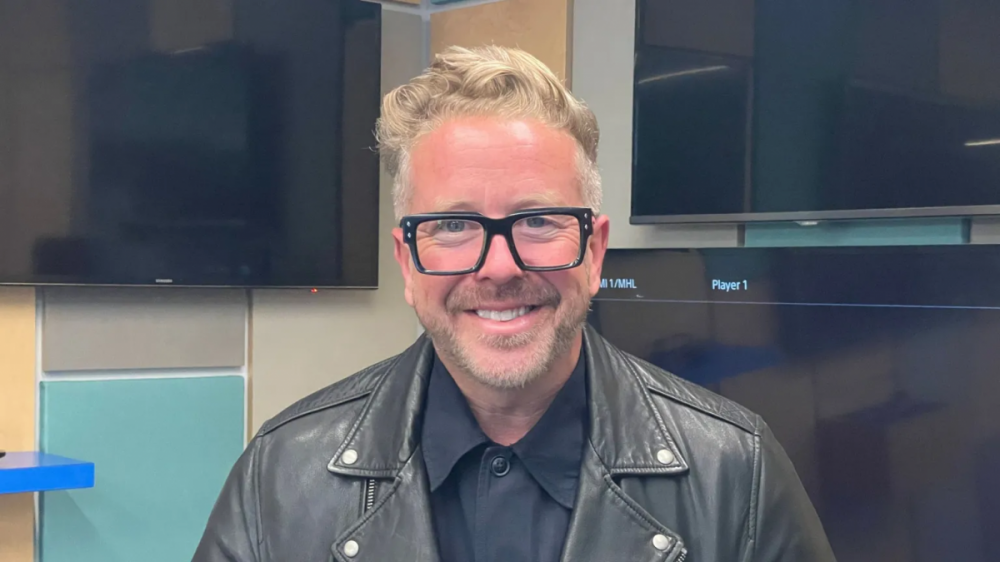
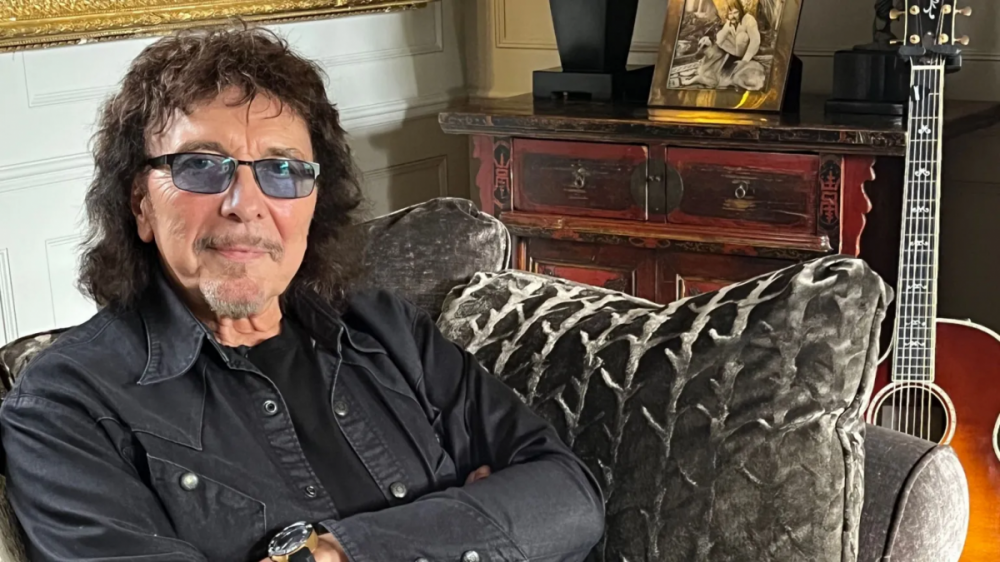
The man behind the flow of Robbie Williams' shows As a singer, Robbie Williams is known for his big hits - Let Me Entertain You, Rock DJ and, of course, Angels. But when the music star goes on stage, what happens behind the scenes? Karl Brazil knows, as he is the singer's musical director and drummer who is, in his words, responsible for the "flow of the shows". He said there were pre-show "wedding reception discos" on the recent world tour, before a performance in front of thousands. "What we do before the shows, is a have a little pre-disco," Brazil said. "We have a playlist, we get together in a room with flashing lights and vibe each other up. "So by the time we get on stage, it looks like we have been at a wedding reception together, it's fantastic." Williams has been playing shows across the globe as part of his BRITPOP 2026 stadium tour, due to conclude in New Zealand in November. Throughout it, Brazil, from Solihull in the West Midlands, said set lists changed depending on different destinations. "If someone buys a ticket for a show, they have got to hear the hits, so of course we make sure that the set list is right for each territory. Because Rob is so big everywhere. Thirty years of music, you have to make sure," the 49-year-old added. "We look at it with huge detail, every show. "For example, Candy, huge [in Europe]. But when we go to Australia, it's not that known. It's not something that needs to be in the show out there." The on-stage tour team consists of a 10-piece band, eight dancers and Williams himself. While performing on the current stadium tour, the drummer said he made sure to be "there for Rob" with his "eyes on everything as the driving force". He added that the performers were all friends, working together each night to put on a unique show. "Each band member has to be great at what they do, they have to be as good on stage and off stage," Brazil said. "I think it's really important, like with any team, the togetherness is so important. "When people see us on stage, they can see that we get on and that we're friends." Throughout the years, Brazil has been musical director for several other high-profile music artists such as 5 Seconds of Summer, Five, Rita Ora, and he had toured and recorded as drummer for James Blunt, Ed Sheeran, Elton John and Niall Horan. Another artist he worked with recently was Black Sabbath's Tony Iommi, drumming on his latest album From the Dark. "This started back in the Covid era. I went into the studio, didn't know what was going to come of it," Brazil said. "I'm delighted to say I made the record, and the first day I went in and Tony was there we got on so well. Tony really let me express myself. "I thoroughly enjoyed being on this record, it's a massive career highlight." Brazil said the new album had in his view "gone down a storm", with Iommi himself describing the collaboration as "something different, but really honoured". Iommi added that the recording was rooted in talent from Birmingham. "The great thing, the whole thing has come from Birmingham," he said, "All the merchandise, all made in Birmingham. We've tried to keep the whole thing wrapped around Birmingham." The man behind the flow of Robbie Williams' shows
-
Came across this on Spotify. I love the pace of this one ❤️ Source https://www.youtube.com/channel/UC3Nho5FPo__hIFbg_UlaCgA Into the Silence (Ambient Mix) appears on Under the Radar Vol. 3 and was written by Robbie Williams, Tim Metcalfe and Flynn Francis, produced by Metcalfe. It is a reimagined version of the closing track from Take the Crown, one that strips back the guitars and drums of the original to focus on atmosphere and emotion. Williams has described the song as one of his proudest achievements, calling it “my finest hour.” Williams explained that Into the Silence was written during a moment of inspiration when he felt a rare sense of creative wonder. Driving through Los Angeles after recording it, he played the demo repeatedly in his car, overwhelmed by what he and his collaborators had created. The song’s haunting beauty and emotional openness quickly made it a fan favourite, and this ambient mix heightens its sense of stillness and reflection. In this version, shimmering synth textures replace the original’s driving guitar line, allowing Williams’ voice to float over a spacious, meditative arrangement. His vocal performance carries both fragility and strength, repeating the plea “Don’t fall apart again, don’t take my heart” with quiet intensity. The reworked production deepens the song’s introspection, emphasising the vulnerability at its core. Fans have praised the ambient mix for its emotional purity and sense of serenity, with many considering it one of the standout moments of the Under the Radar series. The track’s ethereal arrangement and lyrical tenderness create a timeless meditation on heartbreak and hope, reaffirming its place as one of Williams’ most moving compositions. Article courtesy of Into the Silence (Ambient Mix) | Tracks | Robbie Williams Database
Next stop Robbie Williams Live | Get Tickets | Tour Dates & Festivals 2026
 Robbie Williams, the man who conquered the world and forgot to tell America By Penelope H. Fritz The announcement that Robbie Williams would be rendered as a CGI chimpanzee in his own biographical film was not, despite everything, a joke. Better Man, Michael Gracey’s 2024 film about three decades of Williams’ life, commits to that decision for its entire runtime — and in doing so generated more honest conversation about the machinery of British celebrity than anything Williams had said in thirty years of press interviews. The monkey was not a punchline. It was, by most accounts, the point. Robert Peter Williams grew up in Stoke-on-Trent, a Staffordshire city whose relationship with celebrity has historically been cautious. He was sixteen when he auditioned for Take That, a boy band being assembled by manager Nigel Martin-Smith. He got in. For five years, the group — Williams alongside Gary Barlow, Mark Owen, Howard Donald, and Jason Orange — maintained an almost industrial production of UK number ones, synchronized choreography, and the particular pressure that comes from several million teenagers deciding your face is the face of the decade. Williams was the one whose grin read as slightly improvised, slightly dangerous. That tension became unsustainable. He was dismissed from Take That in 1995, before the group dissolved entirely the following year. What he did after that departure is one of British pop’s stranger stories. His first solo single, a cover of George Michael’s Freedom, reached number two in the UK. His debut album, Life Thru a Lens, released in 1997, moved slowly and then everywhere at once — carried almost entirely by Angels, a song that has since accumulated cultural weight entirely disproportionate to its structure. In the decade following its release, it became the most-played record at UK funerals. Every stadium singalong since has been a smaller version of that ritual. The partnership that built what followed was with Guy Chambers, a songwriter and producer Williams met in January 1997. Together they produced I’ve Been Expecting You, Sing When You’re Winning, and Escapology across four years that look, from this distance, like an unrepeatable run. Millennium and She’s the One both reached number one in the UK. Feel, from Escapology, charted in the top five across more than ten countries. By the time the collaboration entered its first hiatus, Williams had sold approximately forty million records under Chambers’ production and won more BRIT Awards than any artist in the ceremony’s then-forty-year history. That record — eighteen BRIT Awards at current count, double the nearest competitor — comes with an asterisk that Williams has acknowledged in various configurations across his career. Despite dominating the UK charts, the European festival circuit, and stadium venues from São Paulo to Sydney, he never managed a meaningful breakthrough in the United States. Angels and Millennium, radio fixtures across three continents, registered almost nothing on American airplay. He toured the US, adapted his presentation for American press, and watched the country’s pop infrastructure produce polite indifference at consistent volume. The gap between his global scale and his American anonymity is so precisely documented that it has become its own footnote in the history of transatlantic pop — the biggest name in the world that the world’s biggest market simply declined to recognize. Williams was candid, in public, about the addiction, the depression, the agoraphobia — the years when performing in front of a hundred thousand people was structurally easier than leaving his house. His 2023 Netflix documentary, four episodes directed by Joe Pearlman with Oscar-winning documentarian Asif Kapadia as executive producer, was constructed around the question of how these two things — the scale of the success and the depth of the private difficulty — could have coexisted as completely as they did. Twenty-five years of intimate archive footage produced a series that the subject described, characteristically, as an attempt to explain himself. It did that, imperfectly and honestly, in roughly equal measure. The period since 2022 has been, commercially, the most consistent run of Williams’ career since his early-2000s peak. XXV, his twenty-fifth-anniversary album, reached UK number one. The soundtrack to Better Man, released in late 2024, added a fifteenth chart-topper. BRITPOP, the new studio album released in February 2026, brought the total to sixteen UK number-one albums — one more than the Beatles’ previous tally for male solo artists, a comparison Williams appears to have noted with appropriate satisfaction. The Britpop World Tour, running through 2025 and 2026 across Europe, Latin America, and Australia, has drawn the stadium crowds that suggest the audience which followed him out of Take That three decades ago has not found anything else to do on a Saturday night. He is, at fifty-two, also president of Port Vale Football Club — a role he assumed in January 2024, adding a genuine institutional stake in his hometown to a biography that already included everything else. The original song he co-wrote for Better Man, Forbidden Road, reached the streaming charts alongside the film’s theatrical run. For a performer whose entire brand was built on narrating his own collapse with theatrical precision, the question of what to do when that collapse resolves into something more stable is not a trivial one. He is still working it out, in stadiums and on record — which, at this point in the story, may be all the answer anyone needs. Selected DiscographyLife Thru a Lens (1997) I’ve Been Expecting You (1998) Sing When You’re Winning (2000) Swing When You’re Winning (2001) Escapology (2002) Intensive Care (2005) Rudebox (2006) Reality Killed the Video Star (2009) Take the Crown (2012) Swings Both Ways (2013) The Christmas Present (2019) BRITPOP (2026) Robbie Williams, the man who conquered the world and forgot to tell America – Martin Cid Magazine
 Review Summary: The root is bitter but the fruit is sweet. NOT FOR EVERYDAY LISTENING! This is not what Mr. Williams was expected to release. Previously Robbie has shown us his soul in his songs together with excellent lyrics, sometimes soulful, sometimes hooligan music. But it is quite difficult to imagine Robbie Williams going so deep in electronic music. Not simply into electronic music. But into a sore, somewhere outdated and even ear-aggravating electronic music followed by rap and hip-hop soundings which are simply incoherent with music. What I'm trying to say is that it is a very heavy, eclectic album for a pop musician and thus, there is no doubt why the album was received negatively by many music critics. It’s far not what the public wants to hear. And what the public does not want to hear often receives a bad mark. This is not really good sometimes. In the same way Dostoevsky’s “Crime and Punishment” received appalling reviews from the critics when it was just published. In the similar way, “Rudebox” is extremely monotonic, “over-rap-ped”, heavy, and, in some places, is extremely annoying. But this is it what makes the CD worth listening. At first, the CD sounds like being over-americanized with hip-hop, rap and electronic music dominating the album. The first set starts with the single “Rudebox”, followed by a cowboy-styled “Viva Life on Mars”, which is in turn substituted by a single “Lovelight”, a cover on “Bongo Bong” and retro-type “She’s Madonna” and it finishes with “Keep On” and “Good Doctor”. These songs have one thing in common: absolutely nonsense lyrics (“She’s Madonna” may be an exception). If the first three songs are at least listenable, other four are simply unlistenable even though Williams reads rap far not bad. These four, starting from "Bongo Bong" and finishing with "Good Doctor" can be called as completely chaotic and unstructured, being backed by aggravatingly monophonic music. After that a simple question may come up to the head: two what Robbie Williams has fallen? However, the second part of the CD shows us that he hasn’t even. Here, step-by-step, the songs become more and more meaningful, understandable and structured. Moreover, music appears to be significantly juicier, however, the upper section being still like a super-heavy metal element from the Mendeleev’s Periodic Table. Nevertheless, such a feeling goes away after Robbie reluctantly declares “good bye to the normals” in “Burslem Normals” song with the “normals” representing this annoying old-fashioned monotonicity. Furthermore, here Robbie Williams sings warmer and more honestly than the cold and monophonic Robbie Williams in the first part. The album, finally, finishes with much lighter compositions which are the cover “Kiss Me”, “The 80s”, “The 90s” and, finally, “Summertime” which depicts the lyrical hero of Robbie finally out of his infinite shell of depression and despair. So, what have we experienced? First, we felt arrogance, boredom and complete uncertainty about the future, the latter being swayed off by the following songs what makes us believe in something happier again. Robbie Williams, in this album, invited us to stand in his shoes, to feel his depression, mental chaos and his mood changes. That is why, maybe, the album is called “Rudebox”. It is rude; its music is in a box of non-originality and over-monotonicity. At the same time, we may feel how the lyrical hero was trapped in this rudebox and how he got out of it in the end. The album may look fancy and cheap by its cover and the first single but in reality it is a very deep and psychological set of songs, which actually tests the listener whether he/she is capable of taking the role of a pop-rock star. This is what I suppose makes this album exceptional. However, still, why 4? Why not 4.5 or even 5 if it is so good? The answer is quite easy: yes, it is outstanding but it is very unlikely that a random person will agree to be tortured a second time. It's just like reading Maxim Gorky's masterpiece "The Lower Depths". Read it and you will understand what I am writing about. Robbie Williams - Rudebox (album review ) | Sputnikmusic
 “Rudebox” by Robbie Williams is the Best Electro Record Ever Made and That’s a FactBy Josh Baines July 27, 2016 On February 13, 1974, the gods of light entertainment blessed us with a gift. At some point on that fateful Wednesday, Robert Peter “Robbie” Williams was swaddled up, swept into the biting winds of Stoke-on-Trent and a legend was born. Robert, at some point, probably on his second day of existence, morphed into Robbie. As Robbie, he’s been the nation’s favorite cheeky chappy for a quarter of a century now. Sure, Bradley Walsh has given it a go, and you’d imagine that Olly Murs would happily donate both bollocks to knock Robbie’s crown clean off his quiff, but it’s never going to happen. Robbie Williams is the cheekiest chappy to ever grace the luminous sofas of chat show sets the world over. Robbie Williams—boy band heartthrob, housewife favorite, UFO hunter, Rat Pack fetishist, and total f***ing legend—is all things to all men. What’s really important though, more important than the record sales or the incredible Facebook presence, is that Robbie is the man behind the greatest electro record of all time: “Rudebox.” You remember “Rudebox” don’t you? The Sly and Robbie-sampling banger that landed at No.4 in the UK charts like a bullet. The nimble little rocket that, “compared to Williams” other singles was considered a commercial disappointment. The cheekiest of the cheeky chappy’s cheeky back catalogue. Of course you remember “Rudebox.” For a decade now you’ve been doing the rudebox. You’ve been shaking your rudebox. You’ve been wondering what the f***ing hell a rudebox is but been having too much fun sweating out on the dancefloor to care. “Rudebox” is inside you, deep, deep inside you. “Angels” is for funerals, “She’s the One” for weddings, and “Rudebox” for every time you and the lads want to kick back with four to six cans of premium continental lager and a deep pan frozen pizza on a Friday night. As he poked his smiley little head out of his mother and mugged to the midwife, not even Robbie—Robert back then you’ll remember—covered in mucus and blood and membrane and placenta but always ready for a smile and a wink at the nurses, could have predicted he’d grow up to release an electro record that found him rapping the following lines in an incredibly stilted semi-Mancunian-cum-cockney-cum-Jamaican accent without dying of shame: OK then back to baseheads Dance like you just won at the special Olympics I got the rudebox off the back of a spaceship So sick I just had to take it The R.U.D.E.B.O.X Up your jacksie, split your kecks Sing a song to Semtex Pocket full of Durex, body full of Mandrex Are we gonna have sex? Will you wear your knee socks? Back to the rudebox Shame isn’t a concept that Robbie Williams is aware of. Robbie Williams was born with the shame synapses of his brain swapped out for boisterousness and banter. This is why “Rudebox” exists. No one else on the planet would have ever considered combining Radio 4 panel show standard comedy rapping with one of the clunkiest choruses ever composed, let alone decided to record it, release it, shoot a video for it, and do promo for it. But Robbie did. Because Robbie knows best. The cheeky chappy’s got us by the balls and he’s looking directly in our eyes and we’re pumping cash into his pockets and smiling back. “Why you so nasty,” a voice asks us. Because Robbie told us to be, we say. Robbie made us nasty. Electro, by and large, is for leather-clad lads with straggly long hair who stick to the walls of goth clubs in seaside towns and call themselves Lord DarkPsyche on Facebook and have the air of damp about them, so it’s no wonder that it took a bona fide star like Robbie to conjure up some much needed magic. He even makes leather—in this case a tricolor-tinged black Adidas jacket—look good. Not even your man from Drexciya could rock a jacket like that. He’s convincing, Robbie, even when he’s peddling utter dross. The Todd Terje interpolating “Candy” should be the kind of sub-Radio 2 whimsy that’s only adored by local radio breakfast show presenters and the terminally dimwitted, but somehow the Robster pulls it off and you’re left confused but fundamentally charmed. Same with “Let Love Be Your Energy” or “The Road to Mandalay” or “Rock DJ.” Robbie’s got that ineffable sense of showbiz about him which means he can dive headfirst into rancid pits of abjection and come up smelling of Davidoff Cool Water. He’s Des O’Connor, he’s Norman Wisdom, he’s Graham f***ing Norton. And “Rudebox” is his masterpiece. It doesn’t matter that Robbie’s ability to rap is on par with your dad’s on Boxing Day after a crate of Spitfire and a mug of Cointreau. It doesn’t matter that he sounds anesthetized on the chorus. Nor does it matter that it’s aged about as well as a teabag left in the bottom of a sink. The fact that Robbie can’t decide if he wants “rudebox” to be a noun or a verb? Doesn’t matter either. It doesn’t even matter that the song might actually be Robbie’s ode to the humble vagina, and how he’s going to “bump” it till the recipient of his rudebox-prodding “drops”. Only Robbie could get away with a song about f***ing someone till they literally die, till their body stiffens round the dampening remains of his electro-tinged stiffy. That’s our Robbie! And look, if our Robbie, the pride of Stoke-on-Trent, the man born to tell jokes to a clearly enraptured Michael Parkinson, an entertainer devoted to giving his audience everything he can and a little more, an icon whose eventual death will be greeted by a period of national mourning with his face emblazoned on the half-mast flags that’ll fly compulsorily from every building in the country, could get away with murder, he could get away with electro. Oh, the only other electro record that comes close? “The Way You Move” by Bodyrockers, obviously. But we’ll talk about that another day. “Rudebox” by Robbie Williams is the Best Electro Record Ever Made and That’s a Fact
Rudebox – The hidden gem of Robbie Williams’ career.June 25, 2017 MarcyB0y1 Comment Every artist is responsible for at least one dud album in their career. Whether its due to misjudgement of genre, poor selection of material or simply an identity crisis, every artist, no matter how credible has had their moment. It’s impossible and unrealistic to expect an artist to consistently produce an output of quality material, particularly over a long career. Many consider Robbie Williams’s ‘dud’ moment to be ‘Rudebox’; his experimental, genre-hopping ‘wonky’ seventh album. It’s an album wrongly but most commonly judged by and remembered for its ill-judged release of the title track and the lack of Guy Chambers’ presence. Yet, given a chance, ‘Rudebox’ is an under-valued and underrated inclusion in Williams’ extensive discography. Over a decade later, it’s still his most endearing and experimental work and certainly holds the test of time with its electronic basis. ‘Rudebox’ was released in October 2006, just a year after Williams’ previous release, the well intentioned but uninspiring ‘Intensive Care’. ‘Intensive Care’ was a notable album for Williams, being the first which lacked the writing credits and production duty of Guy Chambers following a bitter and very public falling out. New collaborator Stephen Duffy tried his utmost best to fill his shoes but just stopped short of doing so. Together, the duo produced an album which was a testament to Robbie’s love of 80’s Pop. It was a brave and worthwhile attempt but aside from its strong selection of singles, the remainder of the album was simply filler and not much else. ‘Rudebox’ was Take 2 of encapsulating Robbie’s influences in an album and this time was a far more substantial effort. At a whopping 73 minutes and 16 tracks long and worked on with various writers, musicians and producers, the album was a bold statement from the outset. Rather than attempt to replace Chambers with a new writer/producer partner, this time, Williams embraced his newly found freedom and worked with whoever he bloody well wanted to work with. The result was a genre-hopping, brash album which covered Hip-Hop, R&B, Electronica, Pop, electropop, funk amongst many others. The album also featured the inclusion of 5 covers, a rarity for Williams. The album got off to a shaky start when a newly-reformed Take That decided to resurrect their career around the time of the ‘Rudebox’ era. Where Take That had the stunning Barlow-ballad ‘Patience‘ which was warmly received by the public and didn’t stray too far from their signature sound, Robbie offered ‘Rudebox‘, an unorthodox venture into Pop/Hip-Hop. Williams’ image hardly represented this image and brand and the single was panned by critics with its cultural references and Williams’ incongruous attempt at rapping. The single fared well in the UK singles chart but is perhaps best summarised by Williams who once referred to it as being “made to feel as welcome as a ginger step child”. In hindsight, ‘Rudebox‘ wasn’t necessarily the wisest choice of lead single on a credibility level but it certainly generated discussion and a buzz around the album. Just weeks later, the album was the subject of great controversy when Williams and ex-Take That manager Nigel Martin-Smith became embroiled in yet another feud. Martin-Smith instigated legal action over the lyrical content present in ‘The 90’s‘, in which Robbie accused his ex-manager of pocketing profits: Now I’m managed by a prick And I’m sixteen and chubby Told me lose twenty pounds and you’re not Rob, you’re Robbie And if I see you with a girl then you’re gonna be sorry And if you don’t sign this contract get your bags from the lobby Such an evil man I used fantasise and take a Stanley knife and go and play with his eyes I pray to the lord he won’t have any children, he didn’t spot Elvis leaving the building Martin-Smith pocketed £300,000 for defamation of character, though the track remained, albeit with the offending verse removed and an instrumental break in its place. Despite blurred reception to early promo of the album and the Martin-Smith controversy, Williams maintained his belief in his newly developed sound at the time: At times, ‘Rudebox‘ is best enjoyed with a tongue-in-cheek attitude whilst at others it can be enjoyed with genuine credibility. The non compos mentis approach to the title track continues through to the likes of ‘Keep On‘, an exceptionally fun but absurd pop track featuring the vocals of Lily Allen and genius production of Mark Ronson. It’s a chaotic and neurotic track on which Robbie raps over a cacophony of hip hop beats, giggling synthesizers and blues-esque guitars. Likewise, the self-deprecating nature of ‘Good Doctor‘ with its quirky jazz and tight percussion is another tongue in cheek moment a genius insight into Williams’ life. It’s Williams at his best as a wordsmith, with lines such as: I went to the doctor to get a prescription I told him little fact but lots of fiction About a bad back that I ain’t got He tried to sell me faith healing, I think not I want Xanax, Vicodin and Oxycontin Then, there’s the quirky, western-techno suffused ‘Viva Life On Mars‘, the tropical-soul of ‘Bongo Bong and Je ne t’aime plus‘ (a cover of two songs originally by Manu Chao) and the flat electronica of ‘Burslem Normals‘ (which after Rudebox, is probably the second worst track on the album). On the whole, however, the album can be enjoyed on a far more credible level. ‘Lovelight‘ is one of the album’s highlights. A cover of Lewis Taylor’s 2003 funk track, Robbie’s gentle falsetto vocals in addition to Mark Ronson’s golden touch of production makes it a shimmering pop moment. It’s still a brilliant track and remains one of Robbie’s most underrated works. Likewise, the Pet Shop Boys collaboration ‘She’s Madonna‘ is pure genius and a prod at Guy Ritchie leaving ex-girlfriend Tania Strecker for the pop superstar. Madge herself was reportedly fond of the track and it is without a doubt one of the album’s finest moments, if not, its best. Had this been released as lead single instead of the title track, the album may be remembered more fondly. Musically inspired by Kraftwerk’s 1983 single ‘Tour De France‘, The Pet Shop Boys’ electronic production is flawless and the accompanying music video (which featured Williams as a drag queen) is similarly as endearing. Even this track couldn’t escape controversy, however when Ashley Hamilton (co-writer of Robbie’s earlier smash hit ‘Come Undone‘) claimed to have co-written the track but hadn’t received any credit. ‘The Actor‘ is in a similar vein to ‘She’s Madonna‘ but far darker in tone, documenting Williams’ dissatisfaction with celebrity culture and most notably, egotistical Hollywood superstars over a squeaky electronic track. ‘Never Touch That Switch‘ is a similarly filthy and paranoia-tinged electro track. Overall, the covers present on the album also work well. ‘Kiss Me‘, a cover of Tin Tin’s 1982 single (previous Williams collaborator Stephen Duffy was a member of the band) is a flamboyant electro interpretation whilst ‘Louise‘ is a loyal and tasteful cover of the Human League track, with added gloss and fizz courtesy of genius William Orbit (responsible for the likes of All Saints’ ‘Pure Shores‘.) ‘We’re The Pet Shop Boys‘ is plastered with self-indulgent humour as Williams enlists The Pet Shop Boys to produce a track originally released by My Robot Friend as a tribute to the duo. Two of the album’s most surprising highlights are ‘The 80’s’, and ‘The 90’s’. These tracks are two bookends documenting Robbie’s experiences as a teenager in the 1980’s and of his rise to fame in Take That during the 1990’s. Out of the two tracks, ‘The 90‘s is superior, an astoundingly frank recollection of Williams’ time in Take That. Unlike his previous digs at his boy-band roots, this track would prove to be the first time he reflected on his past with far greater maturity than demonstrated previously and saw Williams finally accepting some responsibility for his bitter fall out: And now it’s breaking my heart because the dream’s turned to shit It ain’t broke but I’ll break it in a little bit And I’m always in trouble but I’ve stopped saying sorry Everybody’s worried, “What the f***’s wrong with Robbie? He’s not answering his phone, he’s not talking to me I saw him on the telly at Glastonbury.” And now I’m running away from everything that I’ve been And I’m pissed and I’m f***ed and I’m only nineteen I can’t perform no more, I can’t perform no more But the boys know I’m f***ed and so they show me the door And if truth be told I wasn’t fit enough to stay So I put me head down and walked away. Originally written over one of Williams’ favourite songs, ‘Wichita Lineman‘ by Glen Campbell, Jerry Meehan later re-wrote the song musically to remove the sample. It’s a stark reminder of what a brilliant wordsmith Williams is – his ability to tell a story through music is compelling as ever on this track. The album comes to a close with the serenity of ‘Summertime‘, a song written when Williams first left Take That and featured in a different form years earlier during the credits of ‘Mike Bassett: England Manager’. William Orbit’s makeover makes it an ambient, summery anthem and a fitting close to the album. Well, that’s until the grime-pop of ‘Dickhead‘ begins. But the less said about that, the better. ‘Rudebox’ was Williams breaking out of the mould he’d unwittingly trapped himself in and him having the balls to make the album he wanted to make. It’s bold, brash and bloody brilliant and still as endearing as ever almost eleven years later. Rudebox – The hidden gem of Robbie Williams’ career.
I take it you don't like it then
Album Review: Robbie Williams – Rudebox (2006)Posted byswiselyFebruary 6, 2011Posted inMusicTags:Madonna, Pet Shop Boys, Robbie Williams, Rudebox, Take That peak: UK #1 I recently reviewed Williams’ Reality Killed the Video Star (2009). That album is the complete opposite of the one reviewed here, Rudebox, and yet I love both. RKTVS was his last album before he rejoined Take That. The 2009 album was a surprising shift into mature pop – and if you know anything about Robbie Williams, you know “mature” is definitely not the first adjective that comes to mind. In fact, it is the excessively childish nature of his 2006 album, Rudebox, that makes his 2009 album such an achievement. If I had to cite one single reason why I like Rudebox, though, it would be Robbie’s willingness to branch out into weird musical territory. He’d fiddled with rap and electronic elements before (like with “Rock DJ” and “Radio”), but never made a strictly rap-and-electronica song. That’s all this album is, rap and electronica, though there are a few moments of pop. But musically, it’s a perfect running or mindless-partying album. Its purpose is to make you laugh and dance: nothing more, nothing less. So, taken that way, Rudebox is a success. Lyrically speaking, the songs peak with so-stupid-it’s-funny, but nothing is of poetic value. “Good Doctor” is a funky joke song about our modern drug cravings. “Dickhead” is hilariously simplistic and rude – if ever you doubted the usability of the word dickhead, listen to this song, and your mind will be changed. But if you’re a lyrical purist, whatever you do, do not listen to “Keep On.” It’s so stupid, it isn’t even funny. It just hurts. Robbie’s traditionally gone two ways with his hit songs: either making fun of himself or feeling sorry for himself. The lack of Robbie’s personality in the beginning and middle of this album is distracting, because you expect the show to be all about him. Instead, he’s pulling electronic covers (“Lovelight,” “Kiss Me,” and “Bongo Bong/Je Ne T’Aime Plus”) and singing about Madonna and the Pet Shop Boys…with the Pet Shop Boys. So where’s Robbie? He finally shows up in his autobiographical songs, “The 80s” and “The 90s.” Both are solid pop/rap songs, and they are so overly self-centered that you’re finally assured this is a Robbie album. He may even evoke some sympathy from more sensitive listeners. Overall, it’s a B- album. I award the grade for some kickass beats and a couple of laughs. Album Review: Robbie Williams – Rudebox (2006) – Stephanized!
RudeboxEd Power Robbie Williams' seventh album is everything a pop record should not be. Clocking in at 75 baffling and exhausting minutes, Robbie Williams’ seventh album is everything a pop record should not be: portentous, potty-mouthed, over-weening. Williams, now 32 and tiring of the chart wars, is, one guesses, either bent on frightening the beyjasus out of fans, or has finally succumbed to the mania that seemed always to glimmer between the cracks of that cheeky-imp leer. Whatever’s eating him, the result is one of the most dribble-down-its-mouth bizarre mainstream albums in recent memory. Saving Rudebox from itself is a top of the line production crew: William Orbit, The Pet Shop Boys, grime duo Soul Mekanik and house guru Joey Negro all have an opportunity to reshape Robbie in their own image and their studio chops ensure the project is some way shy of a travesty. You will be relieved, for instance, to know that ‘Rudebox’, the single, is, by a distance, the daftest thing on the record. Here Robbie, against the grind and shuffle of a boilerplate funk breakdown, extols us to “rock the three stripes not the Asics” while getting his groove on in quite ludicrous fashion. As the chorus, a spew of distorted Barry White vocals, rolls around for the fifth time, the listener might be forgiven to attacking their stereo with a meat-cleaver. Evidence of William’s plunge off the deep end continues to stack up over the LP’s opening third. ‘Viva Life On Mars‘ trafficks in apocalyptic country rock: not entirely inaccurately Williams describes it as ‘sci fi hoedown’. ‘King Of The Bongo’, meanwhile, is a distressingly exuberant Manu Chao cover with a Lily Allen backing vocal. Scarier yet is ‘Keep On’, which sees our unhinged hero attempting to cultivate the Mike Skinner within. Notwithstanding a satisfyingly squelchy bass-line, the end product is every bit as limp as one would expect. In no way a geezer, Williams’ Joe Bloke shtick would be laughable were it not so cack-handed. Only as the album lurches towards its midpoint does some calm descend. ‘She’s Madonna’, coasting on a glossy Pet Shop Boys production job, is a misty eyed ballad in the tradition of William’s finest – i.e. slushiest – work; ‘The Actor’, for its part, is a passable tilt at euro-techno, featuring Williams and an unidentified female vocalist engaging in a frosty Felix Housecat/Miss Kitten back and forth. Significantly, Rudebox’s two most satisfying moments are covers. William’s reading of the Human League’s ‘Louise,’ upholstered with gleaming William Orbit production, finds the singer swooning at the feet of the song – the only point across the entire record where the wideboy Robbie persona is asked to take a back seat. No less affecting is ‘Kiss Me’, a weak-kneed version of Stephen Duffy’s mid ‘80s hit , wherein Williams delivers a more than passable impression of a heartbroken shyboy. Sandwiched in between is the brilliantly screwy ‘We’re The Pet Shop Boys’, written by the electro artist My Robot Friend and overseen by – oh, can you smell the irony – Neil Tenant and Chris Lowe. Over the closing strait Williams appears to experience a sudden jolt of clarity; realising perhaps that he stands in danger of frightening off the entirety of his fan-base, Robbie trots out ‘Millennium’-shaped ballad, ‘The ‘90s’, a wrenching rumination on his Take That years and the ravaging consequences of fame and wealth. Too little, too late, those diehards that have not already taken refuge in the high ground may bleat. Bloated and barking, Rudebox feels like nothing less than the last will and testament of a pop icon who has fallen out of love with the medium and is scrabbling for a fresh direction. One hopes he finds the inner peace he so clearly, and desperately, seeks. Rudebox | Hotpress
Robbie Williams RUDEBOX. EMI “It wasn’t till I was in a studio the other day listening to a few of the tracks back, I was with the Soul Mekanik boys and the thought hit me… Do songs like the ones you like, I’m eight albums in, so why didn’t I think of this before? Doh! I’ve just been scared to make this record before I think.” Well Robbie, you’ve at last convinced me. Now I’m no fan but there’s a lot about this album I like; its (very) rude rap, its diversity (he still hangs onto a few pop ballads that are as good as anything he’s recorded before), its humour, its exuberance. Robbie adds, “My solo career started when the Britpop explosion did, and I thought, try and make songs that sound like that, but this is now… I’m 32 years old, eight albums in, and this is the record I’ve always wanted to make. It’s the start for me. It’s reignited how I think about what I can do with music myself. I’ve always been scared to try out different things and with this album I think I’ve lost the fear of where I should be in my head as a populist; as a populist artist. It means I can just go and do wonky pop now, which is I really wanted to do anyway. “It has become something on which I’ve found myself. This is the right direction for me personally, this is what it is. I saw the whole Robbie thing coming to a close: I couldn’t make another album like the ones I made before; and this has just opened up a thousand other doors. What I am excited about now is making more music. I love all the stuff on this album, I love Rudebox, it’s a favourite song of mine. I don’t know what’s gonna happen now, I’m excited about getting it out there, but I’m more excited about making more.” There’s no less than 16 songs on RUDEBOX and at times it had me roaring with laughter. For example, Rudebox is a jigging song if I’ve heard one (you can image some very rude dancing to this beat-laden mutha), and his take on black rappers is achingly funny. Bongo Song with the lyric “I’m the king of bongo, hit me when I come…,” innocent female backing vocals and even the odd touch of brass, had my feet tapping and chest heaving. She’s Madonna sounds like a traditional Robbie ballad with its huge melody and expansive production. Keep On is a clever mix of ballad and rap while We’re The Pet Shop Boys is a great homage that includes samples and the boys helping things along. Good Doctor is rap with the funkiest of beats and Robbie doing the black rapper helped by other (real) rappers. Never Touch The Switch opens with some quite unique sounds and I can imagine this making USA inroads. Louise is a top quality pop ballad with a lower register voice floating over a top William Orbit production and mix. It’s a highlight of this interesting album. My other great favourite is the haunting Burslem Normals which sounds like another Orbit effort but is actually produced by Soul Mekanik and mixed by Jeremy Wheatley. Perhaps RUDEBOX is not a great album but it is a very good one, and I think I’m listening to the real Robbie Williams for the first time. It’s almost like a concept pop album with many high points and very little to dislike; it’s also diverse in both mood and pace. Ultimately it’s Robbie taking a few risks, and in a way I could almost get to like him. Well done fella… 3.5/5 Shakenstir » Robbie Williams RUDEBOX. EMI
“Rudebox” by Robbie Williams is the Best Electro Record Ever Made and That’s a FactBy Josh Baines July 27, 2016 On February 13, 1974, the gods of light entertainment blessed us with a gift. At some point on that fateful Wednesday, Robert Peter “Robbie” Williams was swaddled up, swept into the biting winds of Stoke-on-Trent and a legend was born. Robert, at some point, probably on his second day of existence, morphed into Robbie. As Robbie, he’s been the nation’s favorite cheeky chappy for a quarter of a century now. Sure, Bradley Walsh has given it a go, and you’d imagine that Olly Murs would happily donate both bollocks to knock Robbie’s crown clean off his quiff, but it’s never going to happen. Robbie Williams is the cheekiest chappy to ever grace the luminous sofas of chat show sets the world over. Robbie Williams—boy band heartthrob, housewife favorite, UFO hunter, Rat Pack fetishist, and total f***ing legend—is all things to all men. What’s really important though, more important than the record sales or the incredible Facebook presence, is that Robbie is the man behind the greatest electro record of all time: “Rudebox.” You remember “Rudebox” don’t you? The Sly and Robbie-sampling banger that landed at No.4 in the UK charts like a bullet. The nimble little rocket that, “compared to Williams” other singles was considered a commercial disappointment. The cheekiest of the cheeky chappy’s cheeky back catalogue. Of course you remember “Rudebox.” For a decade now you’ve been doing the rudebox. You’ve been shaking your rudebox. You’ve been wondering what the f***ing hell a rudebox is but been having too much fun sweating out on the dancefloor to care. “Rudebox” is inside you, deep, deep inside you. “Angels” is for funerals, “She’s the One” for weddings, and “Rudebox” for every time you and the lads want to kick back with four to six cans of premium continental lager and a deep pan frozen pizza on a Friday night. As he poked his smiley little head out of his mother and mugged to the midwife, not even Robbie—Robert back then you’ll remember—covered in mucus and blood and membrane and placenta but always ready for a smile and a wink at the nurses, could have predicted he’d grow up to release an electro record that found him rapping the following lines in an incredibly stilted semi-Mancunian-cum-cockney-cum-Jamaican accent without dying of shame: OK then back to baseheads Dance like you just won at the special Olympics I got the rudebox off the back of a spaceship So sick I just had to take it The R.U.D.E.B.O.X Up your jacksie, split your kecks Sing a song to Semtex Pocket full of Durex, body full of Mandrex Are we gonna have sex? Will you wear your knee socks? Back to the rudebox Shame isn’t a concept that Robbie Williams is aware of. Robbie Williams was born with the shame synapses of his brain swapped out for boisterousness and banter. This is why “Rudebox” exists. No one else on the planet would have ever considered combining Radio 4 panel show standard comedy rapping with one of the clunkiest choruses ever composed, let alone decided to record it, release it, shoot a video for it, and do promo for it. But Robbie did. Because Robbie knows best. The cheeky chappy’s got us by the balls and he’s looking directly in our eyes and we’re pumping cash into his pockets and smiling back. “Why you so nasty,” a voice asks us. Because Robbie told us to be, we say. Robbie made us nasty. Electro, by and large, is for leather-clad lads with straggly long hair who stick to the walls of goth clubs in seaside towns and call themselves Lord DarkPsyche on Facebook and have the air of damp about them, so it’s no wonder that it took a bona fide star like Robbie to conjure up some much needed magic. He even makes leather—in this case a tricolor-tinged black Adidas jacket—look good. Not even your man from Drexciya could rock a jacket like that. He’s convincing, Robbie, even when he’s peddling utter dross. The Todd Terje interpolating “Candy” should be the kind of sub-Radio 2 whimsy that’s only adored by local radio breakfast show presenters and the terminally dimwitted, but somehow the Robster pulls it off and you’re left confused but fundamentally charmed. Same with “Let Love Be Your Energy” or “The Road to Mandalay” or “Rock DJ.” Robbie’s got that ineffable sense of showbiz about him which means he can dive headfirst into rancid pits of abjection and come up smelling of Davidoff Cool Water. He’s Des O’Connor, he’s Norman Wisdom, he’s Graham f***ing Norton. And “Rudebox” is his masterpiece. It doesn’t matter that Robbie’s ability to rap is on par with your dad’s on Boxing Day after a crate of Spitfire and a mug of Cointreau. It doesn’t matter that he sounds anesthetized on the chorus. Nor does it matter that it’s aged about as well as a teabag left in the bottom of a sink. The fact that Robbie can’t decide if he wants “rudebox” to be a noun or a verb? Doesn’t matter either. It doesn’t even matter that the song might actually be Robbie’s ode to the humble vagina, and how he’s going to “bump” it till the recipient of his rudebox-prodding “drops”. Only Robbie could get away with a song about f***ing someone till they literally die, till their body stiffens round the dampening remains of his electro-tinged stiffy. That’s our Robbie! And look, if our Robbie, the pride of Stoke-on-Trent, the man born to tell jokes to a clearly enraptured Michael Parkinson, an entertainer devoted to giving his audience everything he can and a little more, an icon whose eventual death will be greeted by a period of national mourning with his face emblazoned on the half-mast flags that’ll fly compulsorily from every building in the country, could get away with murder, he could get away with electro. Oh, the only other electro record that comes close? “The Way You Move” by Bodyrockers, obviously. But we’ll talk about that another day. “Rudebox” by Robbie Williams is the Best Electro Record Ever Made and That’s a Fact
Rudebox – The hidden gem of Robbie Williams’ career.June 25, 2017 MarcyB0y1 Comment Every artist is responsible for at least one dud album in their career. Whether its due to misjudgement of genre, poor selection of material or simply an identity crisis, every artist, no matter how credible has had their moment. It’s impossible and unrealistic to expect an artist to consistently produce an output of quality material, particularly over a long career. Many consider Robbie Williams’s ‘dud’ moment to be ‘Rudebox’; his experimental, genre-hopping ‘wonky’ seventh album. It’s an album wrongly but most commonly judged by and remembered for its ill-judged release of the title track and the lack of Guy Chambers’ presence. Yet, given a chance, ‘Rudebox’ is an under-valued and underrated inclusion in Williams’ extensive discography. Over a decade later, it’s still his most endearing and experimental work and certainly holds the test of time with its electronic basis. ‘Rudebox’ was released in October 2006, just a year after Williams’ previous release, the well intentioned but uninspiring ‘Intensive Care’. ‘Intensive Care’ was a notable album for Williams, being the first which lacked the writing credits and production duty of Guy Chambers following a bitter and very public falling out. New collaborator Stephen Duffy tried his utmost best to fill his shoes but just stopped short of doing so. Together, the duo produced an album which was a testament to Robbie’s love of 80’s Pop. It was a brave and worthwhile attempt but aside from its strong selection of singles, the remainder of the album was simply filler and not much else. ‘Rudebox’ was Take 2 of encapsulating Robbie’s influences in an album and this time was a far more substantial effort. At a whopping 73 minutes and 16 tracks long and worked on with various writers, musicians and producers, the album was a bold statement from the outset. Rather than attempt to replace Chambers with a new writer/producer partner, this time, Williams embraced his newly found freedom and worked with whoever he bloody well wanted to work with. The result was a genre-hopping, brash album which covered Hip-Hop, R&B, Electronica, Pop, electropop, funk amongst many others. The album also featured the inclusion of 5 covers, a rarity for Williams. The album got off to a shaky start when a newly-reformed Take That decided to resurrect their career around the time of the ‘Rudebox’ era. Where Take That had the stunning Barlow-ballad ‘Patience‘ which was warmly received by the public and didn’t stray too far from their signature sound, Robbie offered ‘Rudebox‘, an unorthodox venture into Pop/Hip-Hop. Williams’ image hardly represented this image and brand and the single was panned by critics with its cultural references and Williams’ incongruous attempt at rapping. The single fared well in the UK singles chart but is perhaps best summarised by Williams who once referred to it as being “made to feel as welcome as a ginger step child”. In hindsight, ‘Rudebox‘ wasn’t necessarily the wisest choice of lead single on a credibility level but it certainly generated discussion and a buzz around the album. Just weeks later, the album was the subject of great controversy when Williams and ex-Take That manager Nigel Martin-Smith became embroiled in yet another feud. Martin-Smith instigated legal action over the lyrical content present in ‘The 90’s‘, in which Robbie accused his ex-manager of pocketing profits: Now I’m managed by a prick And I’m sixteen and chubby Told me lose twenty pounds and you’re not Rob, you’re Robbie And if I see you with a girl then you’re gonna be sorry And if you don’t sign this contract get your bags from the lobby Such an evil man I used fantasise and take a Stanley knife and go and play with his eyes I pray to the lord he won’t have any children, he didn’t spot Elvis leaving the building Martin-Smith pocketed £300,000 for defamation of character, though the track remained, albeit with the offending verse removed and an instrumental break in its place. Despite blurred reception to early promo of the album and the Martin-Smith controversy, Williams maintained his belief in his newly developed sound at the time: At times, ‘Rudebox‘ is best enjoyed with a tongue-in-cheek attitude whilst at others it can be enjoyed with genuine credibility. The non compos mentis approach to the title track continues through to the likes of ‘Keep On‘, an exceptionally fun but absurd pop track featuring the vocals of Lily Allen and genius production of Mark Ronson. It’s a chaotic and neurotic track on which Robbie raps over a cacophony of hip hop beats, giggling synthesizers and blues-esque guitars. Likewise, the self-deprecating nature of ‘Good Doctor‘ with its quirky jazz and tight percussion is another tongue in cheek moment a genius insight into Williams’ life. It’s Williams at his best as a wordsmith, with lines such as: I went to the doctor to get a prescription I told him little fact but lots of fiction About a bad back that I ain’t got He tried to sell me faith healing, I think not I want Xanax, Vicodin and Oxycontin Then, there’s the quirky, western-techno suffused ‘Viva Life On Mars‘, the tropical-soul of ‘Bongo Bong and Je ne t’aime plus‘ (a cover of two songs originally by Manu Chao) and the flat electronica of ‘Burslem Normals‘ (which after Rudebox, is probably the second worst track on the album). On the whole, however, the album can be enjoyed on a far more credible level. ‘Lovelight‘ is one of the album’s highlights. A cover of Lewis Taylor’s 2003 funk track, Robbie’s gentle falsetto vocals in addition to Mark Ronson’s golden touch of production makes it a shimmering pop moment. It’s still a brilliant track and remains one of Robbie’s most underrated works. Likewise, the Pet Shop Boys collaboration ‘She’s Madonna‘ is pure genius and a prod at Guy Ritchie leaving ex-girlfriend Tania Strecker for the pop superstar. Madge herself was reportedly fond of the track and it is without a doubt one of the album’s finest moments, if not, its best. Had this been released as lead single instead of the title track, the album may be remembered more fondly. Musically inspired by Kraftwerk’s 1983 single ‘Tour De France‘, The Pet Shop Boys’ electronic production is flawless and the accompanying music video (which featured Williams as a drag queen) is similarly as endearing. Even this track couldn’t escape controversy, however when Ashley Hamilton (co-writer of Robbie’s earlier smash hit ‘Come Undone‘) claimed to have co-written the track but hadn’t received any credit. ‘The Actor‘ is in a similar vein to ‘She’s Madonna‘ but far darker in tone, documenting Williams’ dissatisfaction with celebrity culture and most notably, egotistical Hollywood superstars over a squeaky electronic track. ‘Never Touch That Switch‘ is a similarly filthy and paranoia-tinged electro track. Overall, the covers present on the album also work well. ‘Kiss Me‘, a cover of Tin Tin’s 1982 single (previous Williams collaborator Stephen Duffy was a member of the band) is a flamboyant electro interpretation whilst ‘Louise‘ is a loyal and tasteful cover of the Human League track, with added gloss and fizz courtesy of genius William Orbit (responsible for the likes of All Saints’ ‘Pure Shores‘.) ‘We’re The Pet Shop Boys‘ is plastered with self-indulgent humour as Williams enlists The Pet Shop Boys to produce a track originally released by My Robot Friend as a tribute to the duo. Two of the album’s most surprising highlights are ‘The 80’s’, and ‘The 90’s’. These tracks are two bookends documenting Robbie’s experiences as a teenager in the 1980’s and of his rise to fame in Take That during the 1990’s. Out of the two tracks, ‘The 90‘s is superior, an astoundingly frank recollection of Williams’ time in Take That. Unlike his previous digs at his boy-band roots, this track would prove to be the first time he reflected on his past with far greater maturity than demonstrated previously and saw Williams finally accepting some responsibility for his bitter fall out: And now it’s breaking my heart because the dream’s turned to shit It ain’t broke but I’ll break it in a little bit And I’m always in trouble but I’ve stopped saying sorry Everybody’s worried, “What the f***’s wrong with Robbie? He’s not answering his phone, he’s not talking to me I saw him on the telly at Glastonbury.” And now I’m running away from everything that I’ve been And I’m pissed and I’m f***ed and I’m only nineteen I can’t perform no more, I can’t perform no more But the boys know I’m f***ed and so they show me the door And if truth be told I wasn’t fit enough to stay So I put me head down and walked away. Originally written over one of Williams’ favourite songs, ‘Wichita Lineman‘ by Glen Campbell, Jerry Meehan later re-wrote the song musically to remove the sample. It’s a stark reminder of what a brilliant wordsmith Williams is – his ability to tell a story through music is compelling as ever on this track. The album comes to a close with the serenity of ‘Summertime‘, a song written when Williams first left Take That and featured in a different form years earlier during the credits of ‘Mike Bassett: England Manager’. William Orbit’s makeover makes it an ambient, summery anthem and a fitting close to the album. Well, that’s until the grime-pop of ‘Dickhead‘ begins. But the less said about that, the better. ‘Rudebox’ was Williams breaking out of the mould he’d unwittingly trapped himself in and him having the balls to make the album he wanted to make. It’s bold, brash and bloody brilliant and still as endearing as ever almost eleven years later. Rudebox – The hidden gem of Robbie Williams’ career.
I take it you don't like it then
Album Review: Robbie Williams – Rudebox (2006)Posted byswiselyFebruary 6, 2011Posted inMusicTags:Madonna, Pet Shop Boys, Robbie Williams, Rudebox, Take That peak: UK #1 I recently reviewed Williams’ Reality Killed the Video Star (2009). That album is the complete opposite of the one reviewed here, Rudebox, and yet I love both. RKTVS was his last album before he rejoined Take That. The 2009 album was a surprising shift into mature pop – and if you know anything about Robbie Williams, you know “mature” is definitely not the first adjective that comes to mind. In fact, it is the excessively childish nature of his 2006 album, Rudebox, that makes his 2009 album such an achievement. If I had to cite one single reason why I like Rudebox, though, it would be Robbie’s willingness to branch out into weird musical territory. He’d fiddled with rap and electronic elements before (like with “Rock DJ” and “Radio”), but never made a strictly rap-and-electronica song. That’s all this album is, rap and electronica, though there are a few moments of pop. But musically, it’s a perfect running or mindless-partying album. Its purpose is to make you laugh and dance: nothing more, nothing less. So, taken that way, Rudebox is a success. Lyrically speaking, the songs peak with so-stupid-it’s-funny, but nothing is of poetic value. “Good Doctor” is a funky joke song about our modern drug cravings. “Dickhead” is hilariously simplistic and rude – if ever you doubted the usability of the word dickhead, listen to this song, and your mind will be changed. But if you’re a lyrical purist, whatever you do, do not listen to “Keep On.” It’s so stupid, it isn’t even funny. It just hurts. Robbie’s traditionally gone two ways with his hit songs: either making fun of himself or feeling sorry for himself. The lack of Robbie’s personality in the beginning and middle of this album is distracting, because you expect the show to be all about him. Instead, he’s pulling electronic covers (“Lovelight,” “Kiss Me,” and “Bongo Bong/Je Ne T’Aime Plus”) and singing about Madonna and the Pet Shop Boys…with the Pet Shop Boys. So where’s Robbie? He finally shows up in his autobiographical songs, “The 80s” and “The 90s.” Both are solid pop/rap songs, and they are so overly self-centered that you’re finally assured this is a Robbie album. He may even evoke some sympathy from more sensitive listeners. Overall, it’s a B- album. I award the grade for some kickass beats and a couple of laughs. Album Review: Robbie Williams – Rudebox (2006) – Stephanized!
RudeboxEd Power Robbie Williams' seventh album is everything a pop record should not be. Clocking in at 75 baffling and exhausting minutes, Robbie Williams’ seventh album is everything a pop record should not be: portentous, potty-mouthed, over-weening. Williams, now 32 and tiring of the chart wars, is, one guesses, either bent on frightening the beyjasus out of fans, or has finally succumbed to the mania that seemed always to glimmer between the cracks of that cheeky-imp leer. Whatever’s eating him, the result is one of the most dribble-down-its-mouth bizarre mainstream albums in recent memory. Saving Rudebox from itself is a top of the line production crew: William Orbit, The Pet Shop Boys, grime duo Soul Mekanik and house guru Joey Negro all have an opportunity to reshape Robbie in their own image and their studio chops ensure the project is some way shy of a travesty. You will be relieved, for instance, to know that ‘Rudebox’, the single, is, by a distance, the daftest thing on the record. Here Robbie, against the grind and shuffle of a boilerplate funk breakdown, extols us to “rock the three stripes not the Asics” while getting his groove on in quite ludicrous fashion. As the chorus, a spew of distorted Barry White vocals, rolls around for the fifth time, the listener might be forgiven to attacking their stereo with a meat-cleaver. Evidence of William’s plunge off the deep end continues to stack up over the LP’s opening third. ‘Viva Life On Mars‘ trafficks in apocalyptic country rock: not entirely inaccurately Williams describes it as ‘sci fi hoedown’. ‘King Of The Bongo’, meanwhile, is a distressingly exuberant Manu Chao cover with a Lily Allen backing vocal. Scarier yet is ‘Keep On’, which sees our unhinged hero attempting to cultivate the Mike Skinner within. Notwithstanding a satisfyingly squelchy bass-line, the end product is every bit as limp as one would expect. In no way a geezer, Williams’ Joe Bloke shtick would be laughable were it not so cack-handed. Only as the album lurches towards its midpoint does some calm descend. ‘She’s Madonna’, coasting on a glossy Pet Shop Boys production job, is a misty eyed ballad in the tradition of William’s finest – i.e. slushiest – work; ‘The Actor’, for its part, is a passable tilt at euro-techno, featuring Williams and an unidentified female vocalist engaging in a frosty Felix Housecat/Miss Kitten back and forth. Significantly, Rudebox’s two most satisfying moments are covers. William’s reading of the Human League’s ‘Louise,’ upholstered with gleaming William Orbit production, finds the singer swooning at the feet of the song – the only point across the entire record where the wideboy Robbie persona is asked to take a back seat. No less affecting is ‘Kiss Me’, a weak-kneed version of Stephen Duffy’s mid ‘80s hit , wherein Williams delivers a more than passable impression of a heartbroken shyboy. Sandwiched in between is the brilliantly screwy ‘We’re The Pet Shop Boys’, written by the electro artist My Robot Friend and overseen by – oh, can you smell the irony – Neil Tenant and Chris Lowe. Over the closing strait Williams appears to experience a sudden jolt of clarity; realising perhaps that he stands in danger of frightening off the entirety of his fan-base, Robbie trots out ‘Millennium’-shaped ballad, ‘The ‘90s’, a wrenching rumination on his Take That years and the ravaging consequences of fame and wealth. Too little, too late, those diehards that have not already taken refuge in the high ground may bleat. Bloated and barking, Rudebox feels like nothing less than the last will and testament of a pop icon who has fallen out of love with the medium and is scrabbling for a fresh direction. One hopes he finds the inner peace he so clearly, and desperately, seeks. Rudebox | Hotpress
Robbie Williams RUDEBOX. EMI “It wasn’t till I was in a studio the other day listening to a few of the tracks back, I was with the Soul Mekanik boys and the thought hit me… Do songs like the ones you like, I’m eight albums in, so why didn’t I think of this before? Doh! I’ve just been scared to make this record before I think.” Well Robbie, you’ve at last convinced me. Now I’m no fan but there’s a lot about this album I like; its (very) rude rap, its diversity (he still hangs onto a few pop ballads that are as good as anything he’s recorded before), its humour, its exuberance. Robbie adds, “My solo career started when the Britpop explosion did, and I thought, try and make songs that sound like that, but this is now… I’m 32 years old, eight albums in, and this is the record I’ve always wanted to make. It’s the start for me. It’s reignited how I think about what I can do with music myself. I’ve always been scared to try out different things and with this album I think I’ve lost the fear of where I should be in my head as a populist; as a populist artist. It means I can just go and do wonky pop now, which is I really wanted to do anyway. “It has become something on which I’ve found myself. This is the right direction for me personally, this is what it is. I saw the whole Robbie thing coming to a close: I couldn’t make another album like the ones I made before; and this has just opened up a thousand other doors. What I am excited about now is making more music. I love all the stuff on this album, I love Rudebox, it’s a favourite song of mine. I don’t know what’s gonna happen now, I’m excited about getting it out there, but I’m more excited about making more.” There’s no less than 16 songs on RUDEBOX and at times it had me roaring with laughter. For example, Rudebox is a jigging song if I’ve heard one (you can image some very rude dancing to this beat-laden mutha), and his take on black rappers is achingly funny. Bongo Song with the lyric “I’m the king of bongo, hit me when I come…,” innocent female backing vocals and even the odd touch of brass, had my feet tapping and chest heaving. She’s Madonna sounds like a traditional Robbie ballad with its huge melody and expansive production. Keep On is a clever mix of ballad and rap while We’re The Pet Shop Boys is a great homage that includes samples and the boys helping things along. Good Doctor is rap with the funkiest of beats and Robbie doing the black rapper helped by other (real) rappers. Never Touch The Switch opens with some quite unique sounds and I can imagine this making USA inroads. Louise is a top quality pop ballad with a lower register voice floating over a top William Orbit production and mix. It’s a highlight of this interesting album. My other great favourite is the haunting Burslem Normals which sounds like another Orbit effort but is actually produced by Soul Mekanik and mixed by Jeremy Wheatley. Perhaps RUDEBOX is not a great album but it is a very good one, and I think I’m listening to the real Robbie Williams for the first time. It’s almost like a concept pop album with many high points and very little to dislike; it’s also diverse in both mood and pace. Ultimately it’s Robbie taking a few risks, and in a way I could almost get to like him. Well done fella… 3.5/5 Shakenstir » Robbie Williams RUDEBOX. EMI